
PTFE BONDED EPDM GASKET
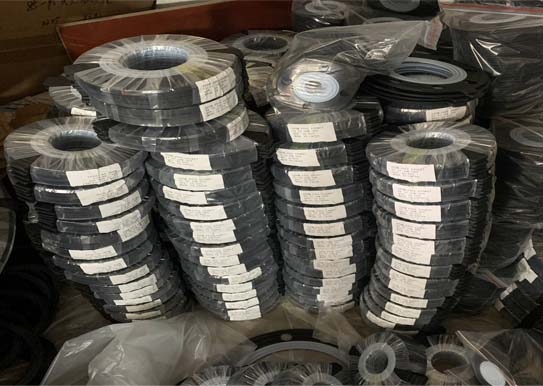
PTFE bonded EPDM gaskets combine the chemical resistance of a PTFE sealing surface with the flexibility and flexible recovery of an EPDM rubber body.
This composite construction is particularly suitable for flange systems where reliable chemical sealing is required but excessive bolt load should be avoided. Typical applications include FRP, plastic, glass-lined and other low-rigidity flange systems, as well as selected steel full-face flanges.
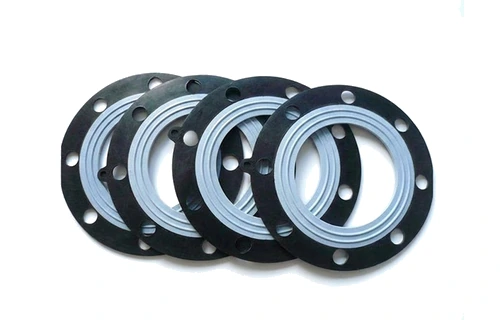
The PTFE layer protects the primary process-contact sealing area, while the resilient EPDM body provides compressibility and recovery. Where raised concentric sealing ribs are incorporated into the gasket design, the available bolt load can be concentrated around the sealing area to improve sealing efficiency.
We manufacture PTFE bonded EPDM flange gaskets in standard and custom dimensions for industrial piping and process equipment.
Construction: PTFE bonded to EPDM
Gasket Type: Full-face composite gasket
Applications: FRP, plastic, glass-lined and industrial flanges
Sizes: Standard and custom dimensions
Flange Standards: Multiple standards available
Custom Production: Available from dimensions or drawings
What Is a PTFE Bonded EPDM Gasket?
A PTFE bonded EPDM gasket is a composite flange gasket consisting of a PTFE sealing layer bonded to a molded EPDM rubber body.
The two materials perform different functions:
PTFE Sealing Surface
Provides the primary chemical-resistant barrier at the process-contact area.
EPDM Body
Provides flexibility, compressibility and elastic recovery under flange load.
This combination gives the gasket different sealing characteristics from either conventional EPDM rubber or solid PTFE used alone.
For flange systems with limited rigidity or allowable bolt load, the resilient construction can help establish sealing contact without excessive tightening.
PTFE bonded EPDM gaskets are therefore commonly considered for:
FRP piping and equipment, PP, PVC, CPVC and other compatible plastic flange systems, Glass-lined equipment, Chemical process piping, Water-treatment systems
Full-face industrial flanges, Other low-bolt-load sealing applications
Why Choose PTFE Bonded EPDM Gaskets?
PTFE Chemical Barrier
The PTFE sealing surface provides broad resistance to many corrosive industrial media while separating the primary process-contact area from the elastomeric body. Complete gasket compatibility should still be confirmed according to the process fluid, temperature and actual PTFE coverage design.
Resilient EPDM Support
The EPDM body compresses more readily than rigid PTFE and provides elastic recovery as flange load changes. This makes the composite construction particularly useful where both chemical resistance and gasket resilience are required.
Sealing at Lower Bolt Loads
FRP, thermoplastic and glass-lined flange systems can be sensitive to excessive or uneven bolt loading. The compressible gasket body, combined with an appropriate sealing profile, allows sealing stress to be developed without relying solely on high bolt torque.
Raised Sealing Profile
Where the gasket incorporates concentric raised sealing ribs, the ribs focus available flange load around the process opening rather than distributing it across the entire gasket surface. This can improve sealing efficiency on low-rigidity flange systems.
Full-Face Flange Support
Full-face construction covers the complete flange face and includes the bolt holes, making it suitable for many flat-face, FRP and plastic flange configurations.
Typical Application

FRP Flanges
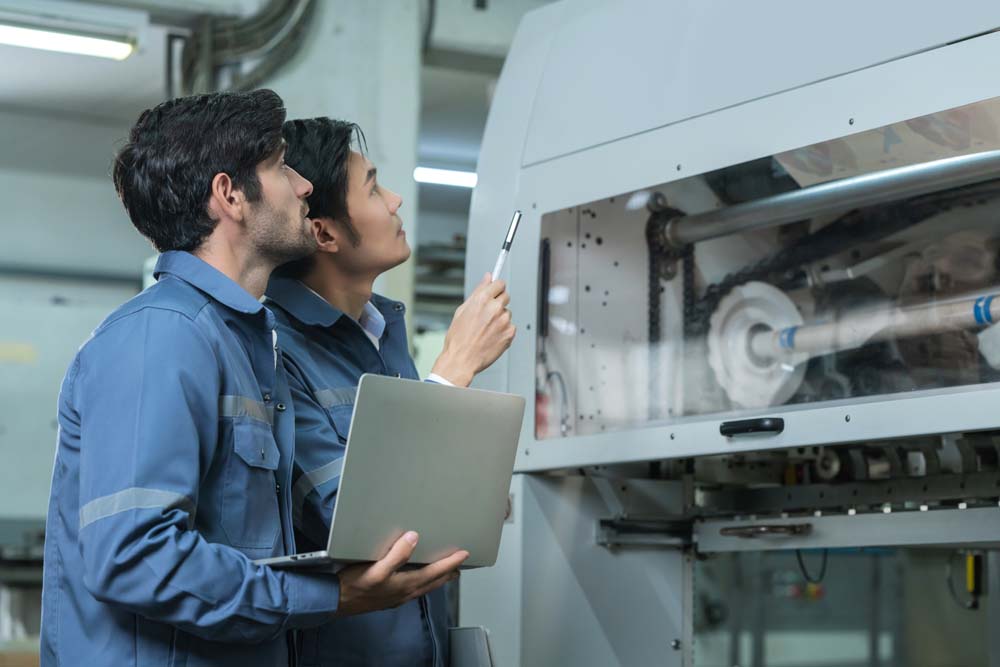
Fiber-reinforced plastic flanges generally have lower rigidity than metallic flanges and may be damaged or distorted by excessive tightening. The resilient EPDM body and low-load sealing characteristics make PTFE bonded EPDM gaskets particularly suitable for selected FRP piping, vessels and process equipment.
Plastic Flanges
PP, PVC, CPVC, PVDF and other thermoplastic flange systems may have limited allowable bolt loads. A compressible composite gasket can help establish sealing contact without unnecessarily high assembly stress. Actual chemical compatibility and bolt loading should be checked for the specific piping system.

Glass-Lined Equipment
Glass-lined flanges require carefully controlled assembly loads to avoid damaging the lining. The soft EPDM support structure makes PTFE bonded EPDM gaskets useful for selected glass-lined piping and equipment where a chemically resistant PTFE contact surface and controlled compression are required.
Steel Full-Face Flanges
The gasket can also be used on suitable steel full-face flange systems where a flexible PTFE-protected sealing solution is preferred
PTFE Bonded EPDM Gasket Design
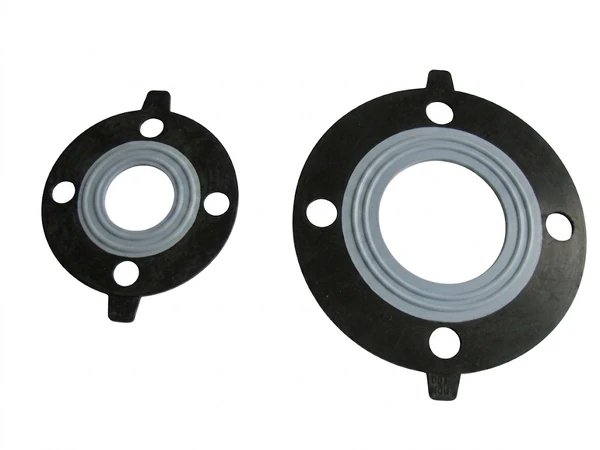
A typical full-face PTFE bonded EPDM gasket includes:
Central process opening
Molded EPDM body
PTFE process-contact sealing surface
Bolt holes
Full-face flange support
Raised sealing ribs where applicable
The PTFE-to-EPDM bond and molded sealing geometry are both important to finished-gasket performance. If concentric sealing ribs are part of the actual product design, their dimensions and continuity should be controlled during molding because they influence how gasket stress is distributed across the sealing area.
Available Sizes and Flange Standards
PTFE bonded EPDM gaskets can be manufactured according to commonly used flange dimensions as well as customer-specific designs.
Available flange standards may include:
ASME / ANSI
EN / DIN
JIS
BS
custom sizes
Final availability should be confirmed according to gasket size, pressure class and actual production capability.
For Standard Flange Gaskets
Please provide: Flange standard,Nominal size,Pressure class or PN,Gasket thickness,Quantity
For Custom Gaskets
Please provide: Inside diameter, Outside diameter, Bolt circle diameter,Bolt-hole diameter, Number of bolt holes, Thickness, Flange material,Drawing where available
custom sizes and OEM gasket dimensions can be produced according to confirmed specifications.
Gasket Standard | ASME B16.21 Class 150# |
Dimension: | ANSI B16.5 Drilling |
Pressure: | 150PSI Plus |
Temperature: | -30°C –150°C |
Size | 1/2″ (DN15) to 16″ (DN400) |
Materials: | PTFE bonded with EPDM Rubber |
Application: | Excellent corrosion resistance to all chemicals |
How to Select a PTFE Bonded EPDM Gasket?
Correct gasket selection should begin with the complete flange system rather than gasket size alone.
Flange Material
Identify whether the flange is FRP, plastic, glass-lined steel, carbon steel, stainless steel or another material. Flange rigidity and allowable bolt load influence the required gasket design.
Process Medium
Provide the actual chemical or process fluid. Although PTFE protects the primary sealing area, complete-gasket compatibility also depends on whether the EPDM body can be exposed at gasket edges, bolt holes or other areas.
Temperature
The usable temperature of the complete PTFE bonded EPDM gasket is generally determined by the composite construction and EPDM grade rather than by PTFE alone. Use the verified gasket TDS rather than the maximum temperature capability of PTFE as a standalone polymer.
Pressure and Bolt Load
Pressure should be considered together with: Flange material Flange standard Gasket dimensions Bolt load Temperature Process medium Do not use a single pressure value as a universal gasket rating.
Gasket Dimensions
For standard piping, provide the flange standard, size and pressure class. For custom equipment, a dimensional drawing is recommended.
PTFE Bonded EPDM vs Other PTFE Gaskets
Different PTFE-based gasket constructions solve different sealing problems.
Gasket Type | Construction | Main Advantage | Typical Application |
PTFE Bonded EPDM | PTFE sealing layer + EPDM body | Resilience and low-load sealing | FRP, plastic, glass-lined flanges |
Expanded PTFE Gasket | 100% expanded PTFE | High conformability and all-PTFE construction | Chemical and industrial flange sealing |
Solid PTFE Gasket | Dense PTFE | Chemical resistance and rigid PTFE construction | General PTFE-compatible flange service |
Standard EPDM Gasket | EPDM rubber | Elasticity and economical sealing | Media compatible directly with EPDM |
Manufacturing and Bonding Quality
For this type of composite gasket, manufacturing quality depends on more than dimensional cutting.Control of the PTFE-to-EPDM bond and molded gasket profile is particularly important.
EPDM Body Control
Key checks can include: Material consistency Hardness Thickness Molded profile Surface condition
PTFE Bonding Preparation
PTFE naturally has very low surface energy, so its bonding surface requires controlled preparation before being bonded to EPDM. Correct preparation is important for maintaining a stable PTFE-to-rubber interface.
Bonding and Molding Control
Process parameters are controlled to achieve consistent adhesion and gasket geometry. Where raised sealing ribs are used, the rib height, shape and continuity should also be inspected.
Finished Gasket Inspection
Typical dimensional checks include: ID and OD Thickness Bolt circle Bolt-hole diameter and position Sealing-profile geometry PTFE bonding condition Appearance Custom gaskets can be manufactured according to standard flange dimensions or approved customer drawings.
Installation Overview
Correct installation is particularly important on FRP, plastic and glass-lined flanges.
Before installation:
1,Confirm the gasket matches the flange standard and dimensions.
2,Inspect the gasket for PTFE damage, contamination or visible delamination.
3,Clean and align both flange faces.
4,Position the gasket accurately around the process opening and bolt holes.
5,Tighten fasteners gradually using the recommended cross-pattern or flange-specific procedure.
6,Follow the flange or equipment manufacturer’s torque requirements.
Do not compensate for flange misalignment or damaged sealing surfaces by excessive bolt tightening.
Always Will Help You
Frequently Asked Questions
It is a composite gasket consisting of a chemically resistant PTFE sealing surface bonded to a flexiable EPDM rubber body.
PTFE provides the primary process-contact barrier, while EPDM provides compressibility and elastic recovery.
FRP and thermoplastic flanges generally tolerate less bolt load than heavy metallic flanges.
The compressible EPDM body and suitable sealing profile can help achieve sealing contact under controlled lower assembly loads
Pure PTFE gaskets are rigid and require higher bolt torque to compress properly, which can easily crack or warp plastic (PVC/CPVC) or FRP flanges. A PTFE bonded EPDM gasket has a soft rubber core that compresses under low torque, sealing effectively without over-stressing delicate flange material
No. Our manufacturing process uses high-temperature, high-pressure chemical thermal bonding to permanently fuse the PTFE membrane to the EPDM core. The layers will not separate or delaminate under standard working temperatures and pressures.
We manufacture full-face and ring-type PTFE bonded EPDM gaskets according to ANSI/ASME B16.5 (1/2" through 24") and DIN/EN 1092-1 standards. We can also produce custom dimensions according to your drawings.
PTFE bonded EPDM is a composite gasket with an elastomeric EPDM support body.
Expanded PTFE gasket is an ePTFE material without an EPDM core.
PTFE bonded EPDM is particularly useful where elastic recovery and low-load sealing are required, while expanded PTFE provides an all-PTFE, highly conformable sealing solution.
Not necessarily.
The PTFE surface protects the primary sealing area, but complete compatibility depends on the gasket design and whether the EPDM is exposed to the process medium at any location
Yes. Standard and custom PTFE bonded EPDM gaskets can be manufactured according customer drawings or samples