

+86-13857810879

info@eptfegasket.com

Expanded PTFE Gasket

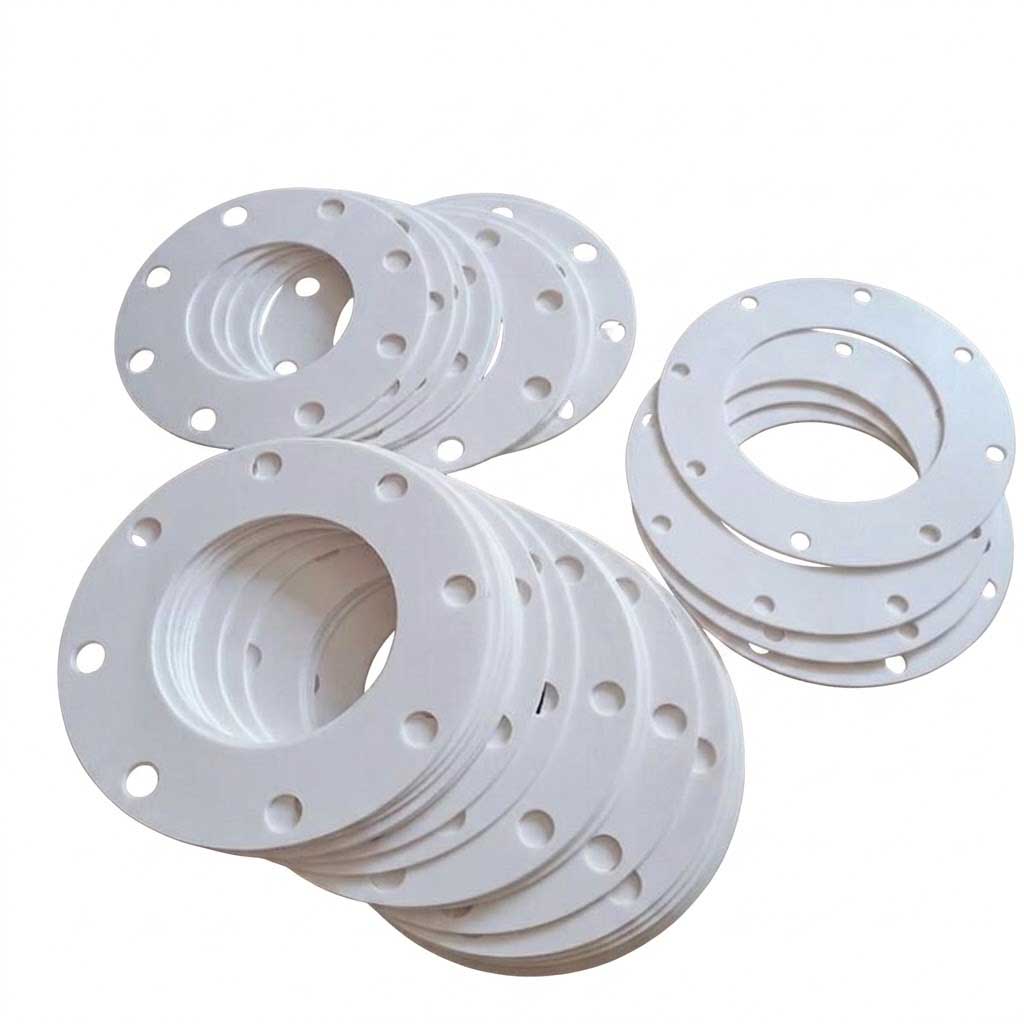
Expanded PTFE gaskets are soft, highly conformable industrial sealing gaskets manufactured from expanded polytetrafluoroethylene (ePTFE).

The expanded structure combines the broad chemical resistance of PTFE with improved compressibility, flexibility and dimensional stability, making ePTFE gaskets particularly suitable for industrial flanges where surface irregularities, limited bolt load or aggressive process media make sealing more challenging.

We manufacture finished expanded PTFE gaskets from ePTFE sheet material in standard and custom dimensions, including ring gaskets, full-face gaskets, large-diameter gaskets and irregular shapes.

Gaskets can be supplied according to flange dimensions, industry standards, customer drawings or samples.

Material: Expanded PTFE
Available Forms: RF, FF, ring and custom-cut gaskets
Dimensions: Standard and custom sizes
Custom Cutting: Available
Drawing-Based Production: Available

What Is an Expanded PTFE Gasket?

An expanded PTFE gasket is a finished static sealing component manufactured from ePTFE gasket material and cut to match a specific flange or equipment geometry.

The expansion process creates a network of PTFE fibrils rather than the relatively dense structure of conventional molded or skived PTFE. This gives the gasket a softer, more compressible structure that can conform closely to the sealing surface when the flange is assembled.

The material retains the broad chemical resistance associated with PTFE while offering sealing characteristics particularly suited to industrial gasketing.

Expanded PTFE gaskets are commonly selected for:

Chemical process piping,Steel equipment flanges, Glass-lined equipment, Selected FRP and plastic flanges, Heat exchangers, Pumps and valves, Pressure vessels,Manways and equipment covers, Custom and irregular flange connections 

expanded ptfe gasket

Why Choose Expanded PTFE Gaskets?

The main advantage of ePTFE is not simply that it is PTFE. Its expanded structure changes how the material behaves under flange compression.

Excellent Surface Conformability

Expanded PTFE is soft enough to adapt to minor flange roughness, waviness, scratches and other surface irregularities. This helps the gasket establish more uniform contact across the sealing surface and can be particularly useful where flange condition is less than ideal. Severely damaged or structurally unsuitable flanges should still be repaired rather than compensated for solely by gasket material.

High Compressibility

ePTFE compresses readily under flange load. This makes it useful for selected flange systems where excessive gasket stress is undesirable or where available bolt load is limited..

Improved Dimensional Stability

The expanded PTFE structure provides improved resistance to the creep and cold-flow behavior commonly associated with conventional unmodified PTFE. Better dimensional stability helps the gasket maintain its geometry during service and reduces excessive deformation under sustained compression..

Excellent Chemical Resistance

Because the gasket is based on PTFE, it provides broad resistance to acids, alkalis, solvents and many other aggressive industrial process media. Chemical compatibility should always be evaluated according to the actual medium, concentration and operating temperature.

Clean PTFE-Based Construction

Expanded PTFE gaskets contain no rubber binder. Suitable grades can be supplied for applications where clean PTFE-based sealing material and supporting compliance documentation are required.

Easy Removal and Replacement

ePTFE gasket material generally separates cleanly from suitable flange surfaces, helping simplify gasket replacement during maintenance.

Custom Expanded PTFE Gasket Manufacturing

As both an expanded PTFE material supplier and gasket manufacturer, we can provide finished sealing gaskets instead of requiring customers to source sheet material and arrange cutting separately.

Our custom gasket service can include:

Material selection

Sheet thickness selection

Dimensional review

RF gasket cutting

FF gasket cutting

Standard flange dimensions

Non-standard dimensions

Irregular shapes

Small- and large-batch production

Drawing-based manufacturing

Custom packaging and identification

Expanded PTFE Gasket Types and Sizes

We manufacture expanded PTFE gaskets in standard and customized shapes, they are

availabe in RF, FF,Standard Flange Gasket, Large-diameter gasket, Custom and Irregular Gaskets.

Expanded PTFE gaskets can be manufactured from ePTFE sheets in a range of standard thicknesses, the common thickness are range from 0.5mm to 10mm. Gasket diameter and dimensions depend on sheet size, gasket forms and manufacturing method 

expanded teflon gasket

Expanded PTFE Gasket Technical Data

PROPERTY 

STANDARD 

VALUE 

Color 

– 

White 

Density 

ASTM D792 

0.75-0.95g/cm3 

Operating temperatures 

– 

-286 – 320°C 

Compressibility 

ASTM F36 

45 % 

Recovery 

ASTM F36 

12 -13% 

Creep Relaxation 

ASTM F38 

35 – 36 % 

Sealability (Nitrogen) 

ASTM F 37B 

0.15 ml / hr 

Sealability (Fuel A) 

ASTM F 37B 

0.02 ml / hr 

Service Pressure 

– 

Full Vaccum to 19 MPa 

Tensile Strength Both directions 

ASTM D638 

19.6 MPa 

Note: Max temperature and pressure capability depends on flange design, gasket dimensions, gasket stress, process medium and installation conditions

Which Flanges Are Suitable for Expanded PTFE Gaskets?

One of the advantages of expanded PTFE is its ability to work with a variety of industrial flange materials and surface conditions.

Steel and Stainless Steel Flanges

ePTFE gaskets are suitable for many process piping and equipment connections requiring chemical resistance and good surface conformity.

Glass-Lined Steel Flanges

Glass-lined equipment can be sensitive to excessive mechanical loading. The high compressibility of expanded PTFE makes it useful for selected glass-lined flange applications where a soft gasket material and controlled sealing load are required. Equipment-manufacturer assembly requirements should always be followed.

FRP and Plastic Flanges

FRP and thermoplastic flange systems typically have lower rigidity and allowable bolt loading than steel flanges. Expanded PTFE can be suitable for selected applications because it can establish sealing contact at relatively low gasket stress. Gasket dimensions, thickness and bolt load must nevertheless be evaluated for the specific flange system.

Flanges with Minor Surface Irregularities

The conformable ePTFE structure can accommodate minor roughness, waviness or surface imperfections more readily than relatively rigid gasket materials. A gasket should not be used to compensate for major flange distortion or structural damage.

Application Industry

Chemical and Petrochemical Processing

Typical applications include process piping, vessels, reactors, pumps, valves and other equipment handling corrosive or chemically aggressive media.

Food and Beverage Processing

Suitable ePTFE grades can be used for relevant food-processing applications where appropriate material compliance documentation is available.

Pharmaceutical and High-Purity Processing

The clean PTFE-based construction makes expanded PTFE useful for selected pharmaceutical and high-purity applications when the required material grade and documentation are specified.

Pulp and Paper

ePTFE gaskets can be used in chemical preparation, bleaching, water treatment and other process equipment requiring corrosion-resistant flange sealing.
Power Generation

Applications can include chemical handling, process piping and auxiliary equipment where PTFE chemical resistance and flange conformability are advantageous.

Marine and General Industrial Equipment:

Expanded PTFE gaskets can be used in pumps, piping systems, vessels, heat exchangers, compressors and other static equipment connections.

How to Select an Expanded PTFE Gasket

Correct gasket selection depends on the complete flange system rather than material type alone.

1. Identify the Flange

Confirm: Flange material

Raised face or flat face Standard or non-standard design Nominal size Pressure class The rigidity and available bolt load of the flange system influence gasket selection.

3. Select an Appropriate Thickness

Gasket thickness should be selected according to flange condition, surface irregularity, geometry and available sealing load. A thicker gasket is not automatically a better sealing solution. Unnecessary thickness can increase deformation and should generally be avoided where the flange surfaces are suitable for a thinner gasket.

5. Check Temperature and Pressure Together

Provide both normal and maximum: Operating temperature Operating pressure Temperature and pressure should not be evaluated independently of gasket dimensions, flange design and bolt loading.

2. Determine Gasket Dimensions

For standard flanges, provide the applicable flange standard and size.

For custom gaskets, provide:

ID,OD,Thickness,Bolt-hole information,Drawing where necessary

4. Confirm the Process Medium

Provide the actual chemical or process fluid and concentration. Chemical resistance should be evaluated at the actual operating temperature rather than at ambient conditions alone.

6. Specify Compliance Requirements

If food-contact, pharmaceutical or other technical documentation is required, state this during quotation so that the suitable grade and documentation can be confirmed.

Expanded PTFE Gasket vs pure PTFE Gasket

PropertyExpanded PTFE GasketPure PTFE Gasket
StructureExpanded fibrillated PTFE Molded or skived PTFE
FlexibilitySoft and conformableRigid
CompressibilityHigherLower
Flange ConformityBetter suited to minor irregularitiesMore dependent on good flange flatness
Creep / Cold FlowReduced compared with unmodified PTFEMore pronounced
Limited Bolt LoadOften advantageousMore application-dependent
Chemical ResistanceExcellent PTFE resistanceHigh PTFE resistance
Custom CuttingExcellentGood

Expanded PTFE Gasket, Sheet or Joint Sealant?

Our expanded PTFE sealing products are available in three main forms.

Expanded PTFE Sheet

Choose Expanded PTFE Sheet when: You cut gaskets in-house. You are a gasket converter. Multiple gasket dimensions need to be produced locally. Sheet stock provides greater inventory flexibility.

Expanded PTFE Gasket

Choose a finished Expanded PTFE Gasket when: Ready-to-install components are required. Flange dimensions are known. RF or FF gaskets are required. Repeat dimensional consistency is important. Custom shapes need to be manufactured from drawings.

Expanded PTFE Joint Sealant

Choose Expanded PTFE Joint Sealant when: Flanges are very large. Flange shapes are irregular. Form-in-place installation is more practical. Stocking a large number of gasket sizes is inconvenient.

Quality Control for Custom ePTFE Gaskets

Reliable finished gaskets require control of both the ePTFE material and the final gasket dimensions. Our production process covers expanded PTFE material preparation, sheet manufacture, gasket conversion and finished-product inspection

Material Control

The expanded PTFE sheet is inspected according to the applicable product specification before gasket production.

Gasket Conversion

After the sheet material is inspected, gaskets are cut according to confirmed dimensions, standards or customer drawings. Depending on product size and order quantity, suitable cutting methods are selected to maintain dimensional accuracy and clean edges.

Finished gaskets Inspection include

Inside diameter Outside diameter Thickness Bolt-hole position Bolt-hole diameter Custom drawing requirements

Custom Supply

We support:Standard and customized dimensions,OEM production Custom packaging,Technical documentation Relevant material compliance documentation where available

Always Will Help You

Frequently Asked Questions

An expanded PTFE gasket is a finished soft sealing gasket manufactured from ePTFE material. Its fibrillated structure provides high softness, compressibility and flange conformity than common pure PTFE.

The material can be the same, but the supply form is different.
Expanded PTFE sheet is supplied as raw gasket material, while an ePTFE gasket is cut to the required dimensions and supplied as a finished product

Yes. We manufacture standard and custom expanded PTFE gaskets according to flange dimensions, drawings or customer specifications.

Common forms include ring, RF, FF, rectangular, oval, irregular custom gaskets

Our ePTFE gaskets are manufactured to standard dimensions including ASME B16.21 (for ASME B16.5 flanges Class 150, 300, and 600) and DIN EN 1514-1 (for PN10, PN16, PN25, and PN40 flanges). We also offer custom manufacturing based on custom drawings.

Filled PTFE gaskets (including silica,glass microspheres, etc) improve creep resistance compared to virgin PTFE but remain rigid. Expanded PTFE (ePTFE) gaskets provide equal or superior creep resistance while remaining extremely soft and flexible, allowing them to conform to damaged flanges with far less bolt torque

Choose the thinnest gasket possible that will fully suit to your flange's surface roughness. Thinner gaskets (1.5mm or 2.0mm) offer maximum pressure resistance and lower creep. Thicker gaskets (3.0mm to 6.0mm) are ideal for heavily pitted, warped, or glass-lined flanges requiring greater compressibility

Neither material is universally better.
Expanded PTFE is generally more conformable and compressible and has improved resistance to creep compared with unmodified PTFE. Pure PTFE remains suitable for many other gasket and engineering applications