
Expanded PTFE Sheet
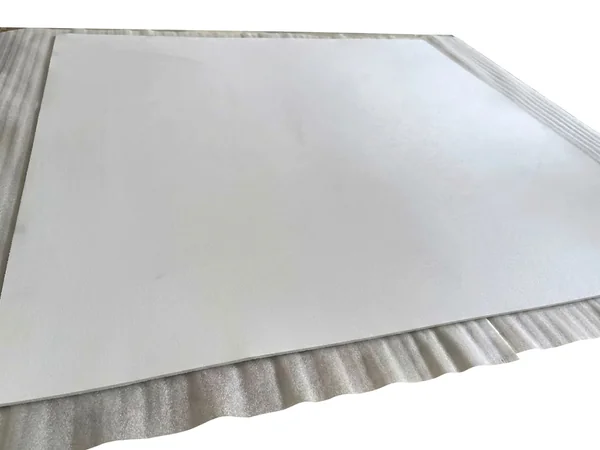
Expanded PTFE sheet is a high-performance gasket material manufactured from virgin PTFE through a controlled expansion process. The resulting multidirectional fibrillated structure makes the material softer and more conformable than common dense PTFE sheet while retaining the inherent chemical resistance of PTFE.
Its combination of compressibility, dimensional stability and adaptability to uneven sealing surfaces makes expanded PTFE sheet particularly suitable for industrial flange gasketing, custom gasket fabrication and applications where available bolt load is limited.
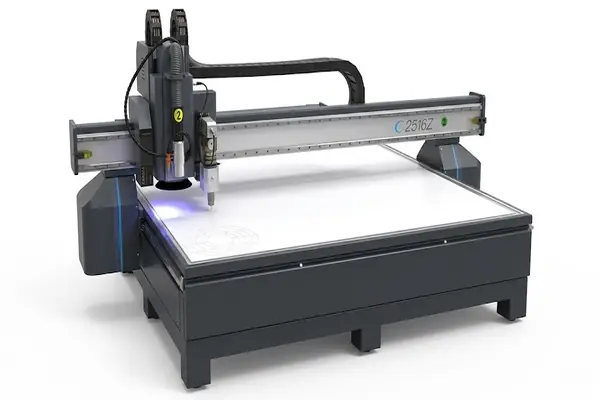
We manufacture and supply expanded PTFE sheets in a range of thicknesses and sheet dimensions and can also make the material into finished custom gaskets according to customer drawings or flange dimensions.
Material: 100% PTFE
Structure: Multidirectionally Expanded PTFE
Available Thickness: 0.5–10 mm
Standard Sheet Width: 1500/3000 mm
Custom Cutting: Available
Finished Gasket Fabrication: Available
industries..
Expanded PTFE Sheet for Industrial Gasket Manufacturing
Expanded PTFE sheet, commonly shortened as ePTFE sheet, is produced by expanding PTFE into a highly fibrillated structure rather than leaving the polymer in the dense form found in pure molded or skived PTFE sheet.
During expansion, the PTFE develops a network of fine fibrils and nodes. This structural change gives expanded PTFE gasket sheet its characteristic softness, compressibility and ability to conform closely to flange surfaces.
The material retains the excellent chemical resistance and non-contaminating characteristics associated with PTFE while providing sealing behavior specifically suited to industrial gasketing.
Expanded PTFE sheet is therefore widely used as stock material for cutting:
Raised-face flange gaskets
Full-face flange gaskets
Large-diameter gaskets
Irregularly shaped gaskets
Equipment and vessel gaskets
Custom sealing parts made from drawings
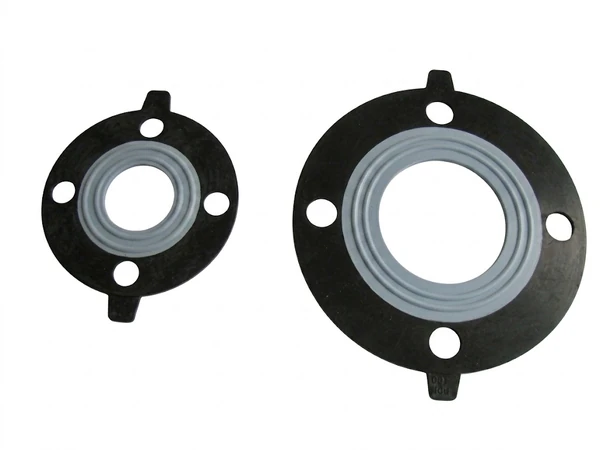
For customers who prefer ready-to-install components, we also manufacture Expanded PTFE Gaskets cut directly from ePTFE sheet.
Why Expanded PTFE Sheet Performs Differently
The sealing performance of expanded PTFE comes primarily from its expanded microstructure.
Unlike pure PTFE sheet, which has a relatively compact polymer structure, ePTFE contains an interconnected network of PTFE nodes and fibrils created during the stretching and heat-setting process.
This structure provides several important advantages for gasket applications.
High Conformability:Expanded PTFE sheet is soft enough to adapt to minor flange irregularities, surface imperfections and uneven sealing faces under compression.
This can be particularly valuable on older process equipment, large flanges and other applications where achieving perfectly uniform flange contact is difficult.
Good Compressibility: The expanded structure compresses more readily than conventional PTFE sheet. This allows the gasket to establish intimate contact with the flange surface without requiring excessive gasket stress, making ePTFE useful in selected applications where available bolt load is limited.
Improved Dimensional Stability: Multi-directional expansion helps distribute material strength across the sheet and improves resistance to the creep and cold-flow behavior commonly associated with conventional unmodified PTFE gasketing.
Excellent Chemical Resistance: Because the base polymer remains PTFE, expanded PTFE sheet retains excellent resistance to a very wide range of industrial chemicals.
Actual material compatibility should always be confirmed according to the process medium, concentration, temperature and operating conditions.
Clean and Flexible Gasket Material: Expanded PTFE sheet contains no rubber binder and can be supplied in grades suitable for applications requiring clean PTFE-based sealing materials.
Grades with suitable compliance documentation are available for relevant food and pharmaceutical applications.
Expanded PTFE Sheet Product Range:
We supply expanded PTFE sheet for gasket converters, industrial distributors, maintenance contractors, OEMs and end users.
Standard and customized supply options allow customers to purchase complete sheets, cut sheet sizes or finished gasket components.
Available Thicknesses:
0.5 mm,1.0 mm,1.5 mm,2.0 mm,3.0 mm,4.0 mm,5.0 mm,6.0 mm,7.0 mm,8.0 mm,9.0 mm
Available Sheet Sizes: 1500 × 1500 mm, 1500 × 3000 mm
Custom dimensions can be made according to requirements.
In addition to full sheets, we can provide:
Cut-to-size ePTFE sheet
Custom gasket production
RF and FF flange gaskets
Large-diameter gasket
Irregular gasket shapes
OEM dimensions and packaging
This allows gasket distributors and industrial users to source either raw sheet material or ready-to-install sealing gasket from us
Product Features
- Soft and Highly Conformable: The flexible ePTFE structure adapts to surface irregularities and helps establish sealing contact across imperfect flange faces
- Reduced Creep and Cold Flow:Compared with PTFE gasketing, the multidirectional expanded structure provides improved dimensional stability under gasket compression
- Excellent Chemical Resistance: PTFE provides broad resistance to acids, alkalis, solvents and many other aggressive process media
- Easy Handling and Fabrication: The material can be cut using conventional gasket-cutting equipment, dies or CNC processing depending on dimensions and production volume
Where Is Expanded PTFE Sheet Used?

Chemical Processing
Used for flange gaskets in pipelines, reactors, vessels and processing equipment handling corrosive or chemically aggressive media

Petrochemical Processing
Suitable for selected flange and equipment sealing applications where chemical resistance and reliable compression are required

Food and Beverage Processing
Selected ePTFE grades can be supplied for applications requiring clean PTFE sealing materials. Where regulatory compliance is required, certification should be confirmed for the specific product grade before use.

Shipping

Power Generation
Used for flange, heat exchanger and equipment gasketing where temperature changes and long-term sealing stability must be considered
Marine and Industrial Equipment
Expanded PTFE gasket sheet can also be used in pumps, compressors, heat exchangers, manways, inspection covers and general industrial flange connections

Pulp and Paper
Suitable for process equipment exposed to chemicals, water, steam and other demanding operating media

Pharmaceutical Processing
The clean PTFE composition and chemical resistance of ePTFE make it suitable for selected pharmaceutical and high-purity processing applications, subject to the required application and compliance specifications
Which Flanges Are Suitable for Expanded PTFE Sheet?
Expanded PTFE sheet can be used across a wide range of industrial flange systems, but gasket selection should always consider flange material, rigidity, surface condition and available bolt load.
Steel Flanges: ePTFE sheet is widely used for process piping and equipment flanges where chemical resistance and dimensional stability are required.
Glass-Lined Flanges: The material’s conformability and relatively low sealing-load requirement can be useful where excessive bolt load could damage sensitive glass-lined equipment.
Plastic and FRP Flanges: For selected applications, the compressibility of expanded PTFE can help accommodate lower available flange loads.
Additionally, gasket dimensions, thickness and installation load should always be evaluated carefully because plastic and FRP flanges may have lower structural rigidity than metallic flanges.
Large or Irregular Flanges: Expanded PTFE sheet is useful where gasket shapes need to be cut specifically for vessels, heat exchangers, columns, manways or other non-standard equipment.
Flanges with Minor Surface Imperfections: The soft material can accommodate minor unevenness or surface irregularity more readily than rigid PTFE sheet.
A gasket should not, however, be used as a substitute for repairing a flange that is structurally damaged or outside acceptable service condition.
Expanded PTFE Sheet vs Pure PTFE Sheet
Expanded PTFE and PTFE share the same base polymer, but their physical structures and sealing behavior are different.
Pure PTFE remains an excellent material for many industrial applications. Expanded PTFE should therefore be selected because its sealing characteristics match the flange and operating conditions, rather than treated as a universal replacement for every PTFE application.
Property | Expanded PTFE Sheet | Pure PTFE Sheet |
Structure | Expanded fibrillated structure | Dense molded or skived structure |
Flexibility | Soft and highly conformable | Comparatively rigid |
Compressibility | Higher | Lower |
Surface Conformability | Better suited to minor irregularities | More dependent on smooth flange surfaces |
Creep / Cold Flow | Improved resistance | More pronounced in unmodified PTFE |
Gasket Fabrication | Excellent | Excellent |
Typical Focus | Industrial flange sealing | General PTFE components and gasketing |
Expanded PTFE Sheet or Finished Expanded PTFE Gasket?
Customers can purchase expanded PTFE either as sheet material or as finished gaskets.
Choose Expanded PTFE Sheet When:
You manufacture gaskets locally
Multiple gasket sizes are required
Custom shapes change frequently
Sheet stock is required for maintenance inventory
You need flexibility for on-site gasket fabrication
Choose Finished Expanded PTFE Gaskets When:
Gasket dimensions are already known
RF or FF flange gaskets are required
Large quantities of repeat sizes are needed
Precision-cut custom shapes are required
You want ready-to-install components
We can supply both ePTFE gasket sheet and finished expanded PTFE gaskets according to your purchasing requirements.
How to Select Expanded PTFE Sheet?
Selecting the correct ePTFE gasket sheet requires more than choosing a thickness.
The following factors should be considered before ordering.
1. Gasket Thickness
Thickness should be selected according to flange flatness, surface condition, gasket geometry and available compression.
A thicker gasket is not automatically a better gasket. Where flange condition and design allow, avoiding unnecessary gasket thickness generally improves dimensional stability.
2. Flange Material and Condition
Identify whether the flange is steel, stainless steel, glass-lined, plastic, FRP or another material.
Flange rigidity and surface condition influence the amount of gasket compression that can be safely applied.
3. Process Medium
Confirm compatibility with the actual chemical or process medium.
The chemical concentration and operating temperature should be considered together rather than evaluating chemical resistance at room temperature alone.
4. Temperature and Pressure
Provide both normal and maximum operating temperature and pressure.
These conditions should be considered together with flange design, gasket dimensions and bolt loading.
5. Gasket Dimensions
For gasket cutting, provide:
Outside diameter
Inside diameter
Bolt-hole dimensions where required
Thickness
Flange standard
Drawing for irregular shapes
6. Required Compliance
For food, pharmaceutical or other regulated applications, specify the compliance documentation required when requesting a quotation.
Always Will Help You
Frequently Asked Questions
virgin PTFE sheet is dense, rigid, and prone to "cold flow" or thermal expansion under heavy loads, which causes the gasket to thin out over time and lose bolt tension. Expanded PTFE (ePTFE) undergoes a controlled multi-directional expansion process that aligns its microscopic fibers. This produces a soft, flexible sheet that maintains high tensile strength and zero cold flow under compressive loads
Its primary use on this product line is gasket fabrication for industrial flanges, piping and process equipment
Yes. Our expanded PTFE sheets are manufactured from 100% pure virgin PTFE resin. They are completely non-contaminating and conform strictly to FDA 21 CFR 177.1550 and European food contact standards
Generally, select the thinnest sheet that will adequately conform to your flange's surface irregularities. Thinner sheets (such as 1.5mm or 2.0mm) offer higher pressure resistance and lower creep. Thicker sheets (such as 3.0mm to 6.0mm) are recommended for severely pitted, warped, or fragile glass-lined flanges that require significant compressibility to achieve a seal
Yes.The material can be converted into ring, RF, FF, rectangular and irregular gasket shapes according to dimensions or drawings.
Its soft structure can suite to minor surface irregularities more effectively than pure PTFE sheet.Major flange damage should still be corrected before gasket installation.
It can be suitable for selected stress-sensitive flange systems because of its compressibility and conformity. Final gasket selection and bolt loading should follow the requirements of the actual flange or equipment system
Choose sheet if you manufacture gaskets in-house.
Choose finished expanded PTFE gaskets if you need ready-to-install materials manufactured to confirmed dimensions.