
Expanded PTFE Joint Sealant
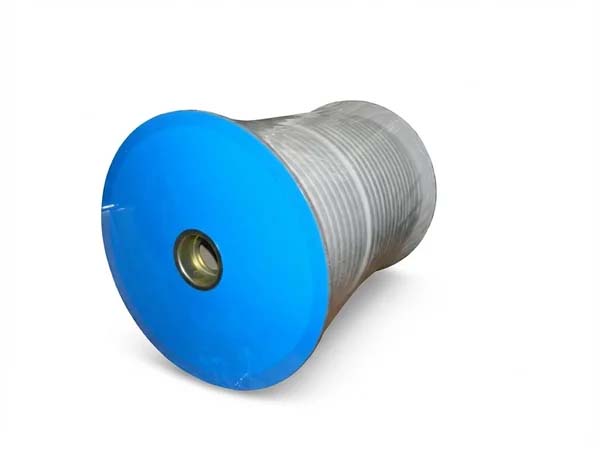
Expanded PTFE joint sealant is a soft, highly conformable form-in-place gasket material manufactured from 100% PTFE.
Supplied in continuous rolls with a self-adhesive backing, it can be applied directly to the flange surface and formed into a gasket during installation. This makes it particularly useful for large-diameter, irregular, rectangular and non-standard flanges where stocking or manufacturing a one-piece gasket can be difficult or inefficient.
The expanded PTFE structure provides excellent conformability and compressibility while retaining the broad chemical resistance associated with PTFE. It can accommodate minor flange irregularities and is suitable for many applications where available bolt load is limited.
We manufacture expanded PTFE joint sealant in multiple widths and thicknesses for industrial flange sealing and can supply standard or customized dimensions according to application requirements.
Material: 100% PTFE
Product Form: Continuous ePTFE sealing tape
Backing: Self-adhesive installation backing
Available Widths: Multiple standard sizes
Custom Supply: Available
What Is Expanded PTFE Joint Sealant?
Expanded PTFE joint sealant, also referred to as ePTFE joint sealant, expanded PTFE sealing tape or ePTFE gasket tape, is a flexible gasket material designed to be formed directly on the sealing surface.
Unlike traditional sheet gasket that must first be cut to a specific outside and inside diameter, joint sealant is supplied as a continuous strip or tape. The installer places the material around the flange sealing area, joins the ends according to the recommended installation procedure and compresses the material as the flange is tightened.
This form-in-place design allows one roll of joint sealant to accommodate many different flange dimensions and shapes.
It is therefore especially useful for:
Large-diameter flanges,Rectangular flanges
Oval and irregular flange shapes,Vessels and equipment covers,Flanges where standard gasket dimensions are unavailable,Maintenance applications requiring flexible gasket stock,Flanges with minor surface irregularities
Why Use ePTFE Joint Sealant?
Expanded PTFE joint sealant combines the chemical resistance of PTFE with a soft, conformable structure specifically suited to static sealing.
Form-in-Place Gasket Construction :
Joint sealant is supplied on a roll rather than as a pre-cut gasket. The required gasket shape is created directly on the flange surface, eliminating the need to stock a separate gasket dimension for every large or non-standard flange. This can be particularly useful for maintenance teams, gasket distributors and industrial plants handling a wide range of equipment sizes.
Conforms to Irregular Sealing Surfaces :
The expanded PTFE structure is soft and compressible, allowing the material to adapt to minor surface roughness, pitting and flange irregularities when compressed. This makes ePTFE joint sealant particularly useful where rigid gasket materials may have difficulty achieving uniform contact across the complete sealing surface. A gasket should not, however, be used as a substitute for repairing a flange that is structurally damaged or outside acceptable service condition.
Suitable for Limited Bolt Load :
Expanded PTFE can establish sealing contact under relatively low gasket stress compared with many harder gasket materials. This makes joint sealant useful in selected stress-sensitive flange systems where excessive bolt loading may damage the equipment. Actual suitability must be evaluated according to flange material, rigidity, gasket dimensions and operating conditions.
Excellent Chemical Resistance:
Because the sealing material is based on PTFE, expanded PTFE joint sealant provides broad resistance to acids, alkalis, solvents and many other aggressive process media. Chemical compatibility should always be confirmed according to the actual medium, concentration and service temperature.
Flexible for Complex Flange Shapes:
Continuous ePTFE sealing tape can follow circular, rectangular, oval and irregular sealing paths. This provides greater flexibility than stocking pre-cut gaskets for equipment with many different dimensions.
Self-Adhesive Installation Backing:
A peel-off adhesive backing helps hold the joint sealant in position during installation, including on vertical flange surfaces. The adhesive backing is intended primarily as an installation aid. Final sealing performance is created by compression of the expanded PTFE material between the flange surfaces.
Where Expanded PTFE Joint Sealant Provides the Most Value?
Joint sealant is not simply another form of PTFE gasket. Its greatest advantage is the ability to solve sealing and inventory problems that become difficult with conventional cut gaskets.
Large-Diameter Equipment :
Manufacturing and transporting large one-piece gaskets can become increasingly difficult as flange diameter increases. Expanded PTFE joint sealant can be installed directly from the roll around large equipment flanges, reducing dependence on pre-cut gasket dimensions. Typical equipment includes: Large vessels Tanks Heat exchangers Columns Large manways Duct systems Process equipment covers Non-Standard and Irregular Flanges Industrial equipment does not always use standard circular piping flanges. Rectangular covers, oval openings, irregular housings and custom equipment can require specially manufactured gaskets. Flexible ePTFE sealing tape follows the actual flange geometry and allows the gasket to be formed on site.
Maintenance and Emergency Gasket Stock :
Keeping every possible large gasket size in inventory is often impractical. A range of joint sealant widths can provide maintenance departments with flexible sealing material that can be adapted to multiple equipment dimensions. This does not eliminate the need for correct gasket selection, but it can reduce dependence on stocking numerous individual cut-gasket sizes.
Flanges with Minor Surface Imperfections :
Because ePTFE is soft and conformable, joint sealant can accommodate minor roughness, pitting or surface irregularity more readily than relatively rigid gasket materials. The flange should still be inspected before installation to confirm that its condition is suitable for continued service.
Expanded PTFE Joint Sealant Specifications
| Width/mm | 3mm | 5mm | 7mm | 10mm | 14mm | 17mm | 20mm | 25mm |
| Inch | 1/8″ | 3/16″ | 1/4″ | 3/8″ | 1/2″ | 5/8″ | 3/4″ | 1″ |
| Thickness/mm | 2.0mm | 2.0mm | 3.0mm | 4.0mm | 5.0mm | 5.0mm | 7.0mm | 8.0mm |
| Length/Meter | 30 | 30 | 15 | 15 | 10 | 10 | 50 | 50 |
Expanded PTFE Joint Sealant vs Pre-Cut Gaskets
Expanded PTFE joint sealant and pre-cut gaskets can both provide effective static sealing, but they solve different purchasing and installation requirements.EPTFE Joint sealant is particularly useful when flange sizes vary or when manufacturing a complete one-piece gasket is inconvenient. For standard and repeat flange dimensions, finished EPTFE Gaskets may provide a simpler installation option
| Factor | Expanded PTFE Joint Sealant | Pre-Cut Gasket |
|---|---|---|
| Supply Form | Continuous roll | Finished gasket |
| Dimensions | Formed on site | Fixed dimensions |
| Large Flanges | Particularly practical | Large custom gasket required |
| Irregular Shapes | Easy to follow | Custom cutting required |
| Inventory | One roll can cover multiple sizes | Individual gasket sizes required |
| Installation | Form-in-place | Ready to install |
| Repeated Standard Flanges | Suitable | Often more convenient |
| Custom Equipment | Highly flexible | Drawing-based production |
Joint Sealant vs Expanded PTFE Sheet vs ePTFE Gasket
Our main expanded PTFE sealing products are available in three different supply forms.
Expanded PTFE Sheet
Choose Expanded PTFE Sheet when your company cuts gaskets in-house or requires flexible sheet stock for multiple gasket dimensions.
Expanded PTFE Gasket
Choose a finished Expanded PTFE Gasket when exact flange dimensions or drawings are available and ready-to-install gaskets are required.
Expanded PTFE Joint Sealant
Choose joint sealant when: Flanges are very large Flange geometry is irregular Many different gasket dimensions must be maintained Gaskets need to be formed directly on site Large pre-cut gaskets are inconvenient to manufacture, transport or store These products are complementary rather than interchangeable in every application.
How to Install ePTFE Joint Sealant?
Correct installation is important to sealing performance.
1. Inspect and Clean the Flange
Remove old gasket residue, oil, dirt and other contamination.
The sealing surface should be clean, dry and structurally suitable for service.
2. Select the Correct Joint Sealant Size
Choose the tape width and thickness according to the available sealing surface, flange condition and application requirements.
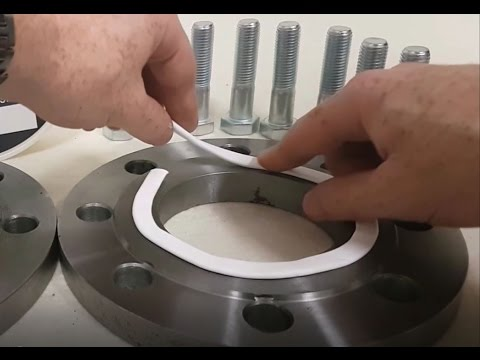
3. Apply the Joint Sealant
Gradually remove the protective backing and position the ePTFE tape along the required sealing path. Avoid unnecessary stretching or contamination during installation.
4. Complete the End Joint
Join the starting and finishing ends according to the installation procedure specified for the particular joint sealant construction.
Overlap or skived-joint requirements can vary according to product type, so the applicable installation instructions should be followed.
5. Assemble and Tighten the Flange
Bring the mating flange surfaces together and tighten the fasteners gradually using the specified tightening sequence and bolt load. Do not compensate for flange misalignment or structural damage through excessive tightening
Always Will Help You
Frequently Asked Questions
Expanded PTFE joint sealant is a soft, continuous ePTFE gasket material supplied on a roll and formed directly on the flange during installation
No. Expanded PTFE joint sealant is an industrial gasket material designed for static flange and equipment sealing. PTFE thread seal tape is a much thinner product primarily used for threaded pipe connections.
It is commonly used for large, irregular and non-standard flanges, vessels, manways, heat exchangers and other equipment where a form-in-place gasket is more practical than a pre-cut gasket
Its soft and conformable structure can suitable for minor roughness and surface irregularities. Major flange damage should be repaired before installation.
The adhesive backing holds the joint sealant in place during installation.
The final seal is effected by compression of the expanded PTFE, not by the adhesive itself.
Selection depends on the available sealing width, flange geometry, surface condition and required compression.
Joint sealant is commonly practical for very large, irregular or frequently changing flange dimensions.
Finished expanded PTFE gaskets are usually more convenient where exact and repeatable flange dimensions are known
Yes. custom dimensions can be discussed according to production schdule and order quantity except for standard widths and thicknesses